
The first 100 days of Amrish Shah (CFOO Enviu): “No organisation can sustain itself in the long run if it keeps making losses.”
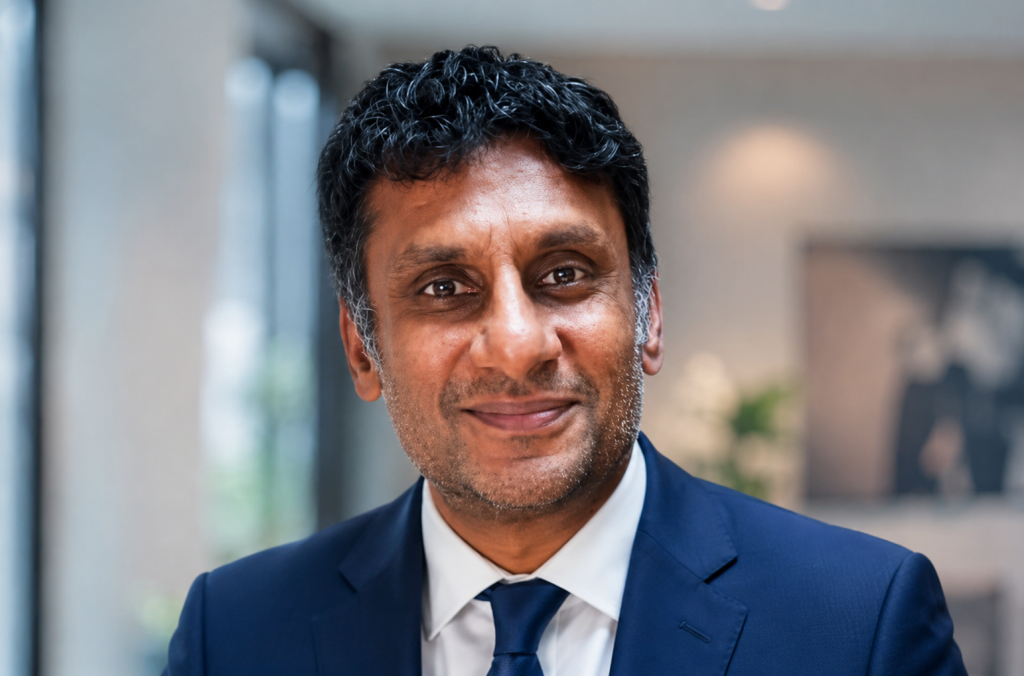
After nearly thirty years in finance, Amrish Shah knew one thing for certain: his next move had to be different. Not a corporate environment, but an organisation with impact, change and international dynamics. He found that at venture builder Enviu, where he has been working since January as CFOO. How does he look back on his first months?
How did you end up at Enviu?
“After my last role as CFO at Metabolic, I took time to think about what the right next step would be for me. That is always a good thing, but especially after nearly 30 years as a financial professional. I was fairly open to all sectors. But I did have other requirements: it should not be a corporate environment, there should be change happening within the organisation itself, there should be a need to take finance to a higher level, and it should be an organisation with an international presence. When the role at Enviu became available, it seemed an excellent match – with an additional dimension: the venture building side. Although I had come into contact with this before, in my previous roles I had worked with it too little to truly understand how it works in practice. This role would allow me to engage with it more intensively. The fact that Enviu is active in East Africa and India – regions I have a personal connection with – also played a role.”
What was your assignment when you were brought on board?
“Enviu is a small organisation that has more impact than you would expect based on its size, and that is at the same time relatively complex, with multiple sectors, locations and areas of activity. My brief is broader than finance alone and also encompasses HR, IT, legal, facilities and impact measurement. The first core element is gaining a grip on the financial reality and stabilising financial health. Even though we are a non-profit, no organisation can sustain itself in the long run if it keeps making losses. Often there is insufficient insight into the financial situation, at almost all levels within the organisation. For me, it starts with properly understanding the financial statements – in particular the balance sheet, which I still see as the most important statement. If you properly connect past and present, you can steer towards the future by plugging leaks, making better choices in resource allocation and creating financial headroom.”
Lees ook op CFO.nl: CFO Day 2026 – ‘Clarity in Chaos’ – Ritchy Drost (CFO van VodafoneZiggo): “In chaos moet je juist soms durven te vertragen. Maar bovenal echte keuzes maken.”
What other priorities do you have?
“A second important element is strengthening governance and board capacity. We have a board with both executive and non-executive members, and it is essential to ensure a good balance between formal responsibilities and the added value of giving advice and constructive challenge. In addition, improving team effectiveness is an important focus, especially given the differences in experience levels and our international context. A third priority lies in culture and leadership. We are an asset-light organisation in which the most important capital resides in people. In a small organisation, staff turnover can have a major impact, so developing a strong culture, clear principles and organisational resilience is crucial.”
What do you want to change in finance and operations in this the role?
“For me, it is important that finance and operations develop from a transactional internal service function into a fully-fledged business partner. That means teams being closer to the substance of the work and actively contributing to better decision-making. This requires a different mindset, but also adjustments to processes, systems and ways of working together. It is not straightforward, because it means change for people and structures, but it is essential to bring the organisation to a higher level and achieve greater impact.”
Lees ook op CFO.nl: Lizet Friesen-Leibbrandt (CFO van IDH): “Kleinschalige boeren produceren 33% van het voedsel in de wereld, maar hebben nauwelijks toegang tot finance.”
What has surprised you most in your first months?
“The reality of an organisation is always different from the picture you get after a number of conversations. What surprised me was the number of outstanding issues from the past – such as the wind-down of older entities and personnel matters – that demanded more time in the first weeks than expected. The complexity of the organisation and the way in which different parts operate relatively autonomously also struck me. That makes it harder to quickly gain an integrated and holistic picture, especially when roles and responsibilities are not always sharply defined.”
How would you characterise the organisational culture?
“A lot of improvising and pushing through to get things done. That is partly characteristic of a small organisation that has had to continuously work on securing funding and focusing on impact. At the same time, it shows how much is achieved despite the absence of sometimes clear structures and frameworks. That is a strength, but also something to pay attention to carefully for the future.”
Lees ook op CFO.nl: Arlette Geluk (CFO van Biotope): “Tot een paar jaar geleden waren we meer een MKB-bedrijf. Inmiddels zijn we een echte Benelux-organisatie.”
What does that mean for your role as a leader?
“It is incumbent on the leadership team to improve those circumstances by creating more clarity, structure and calm. People need to be given the space not only to deliver, but also to reflect and recharge. That ultimately contributes to a healthier organisation and better results.”
What do you look back on with the most satisfaction?
“People’s commitment to Enviu’s mission is strong. The collaboration between programme teams and venture builders is close and demonstrates how strongly the organisation is connected in terms of substance. I have also been pleasantly surprised by the goodwill of our funders and partners. The way in which they speak about the collaboration shows that Enviu, despite its size, is capable of punching above its weight in terms of impact.”
Lees ook op CFO.nl: Joanne Nicastia (CFO Water- en Energiebedrijf Bonaire): “Wij groeien 5 tot 10 procent per jaar, soms zelf double digits.”





Populair


Markt Update


Whitepapers


Vragen over adverteren?
Kan ik je van dienst zijn met advies? Bel of mail gerust. Ik neem graag de tijd voor je.
Wendy Batist
Accountmanager